


Table of Contents
- Uganda's Export Earnings Skyrocket 35%: Gold and Coffee Lead Historic Economic Growth
- Introduction
- The Golden Rush: Mining Sector Analysis
- Coffee's Resilient Performance
- Export Growth Breakdown by Sector
- Regional Trade Partnerships
- Government Policies Driving Growth
- Challenges Amidst Growth
- Economic Impact on Local Communities
- Future Growth Projections
- Conclusion
- FAQs
Uganda's Export Earnings Skyrocket 35%: Gold and Coffee Lead Historic Economic Growth
Introduction
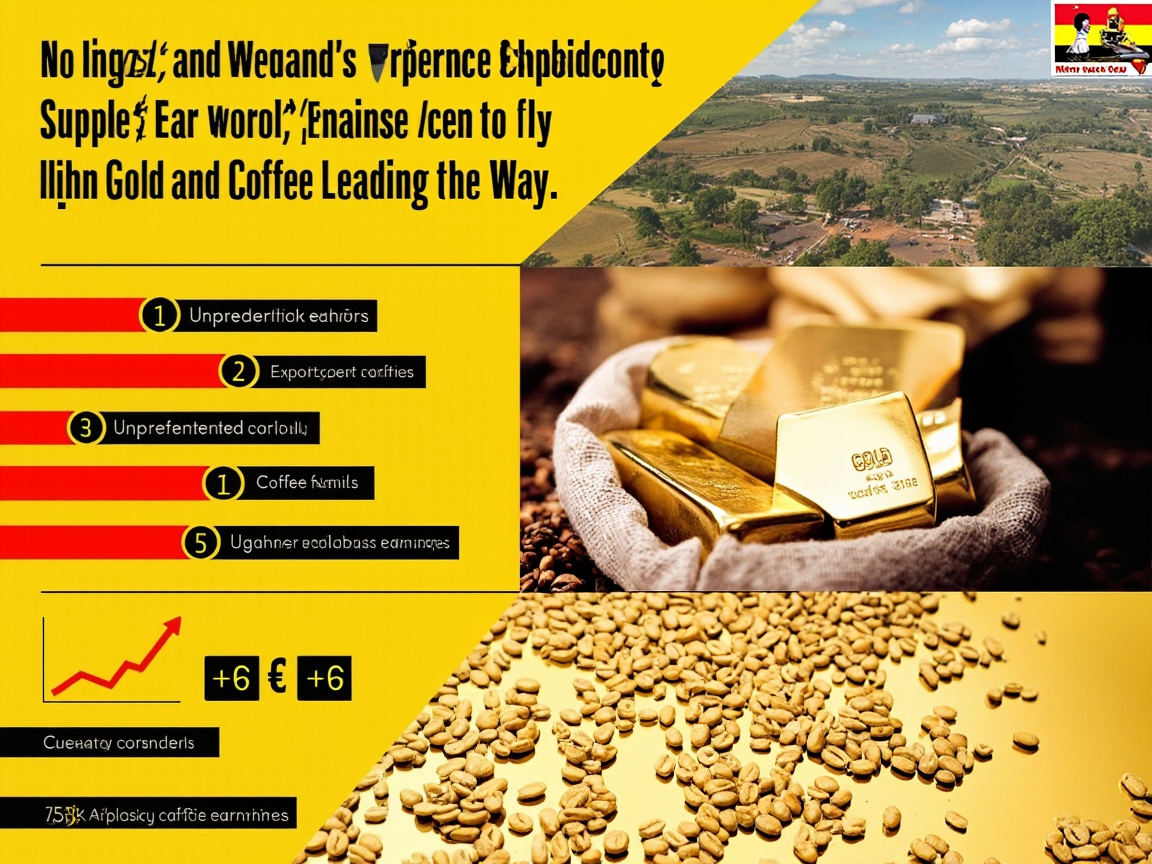
Did you know that Uganda's export revenue has surged by an astonishing 35% in just one year, defying global economic slowdown predictions? The Uganda export earnings growth represents one of the most remarkable economic transformations in East Africa, with the country's export value climbing from $3.7 billion to over $5 billion in the most recent fiscal period. This unprecedented expansion has been primarily fueled by two key sectors: gold mining and coffee production, which together account for nearly 60% of the country's export value. What factors have contributed to this exceptional performance, and can this growth trajectory be sustained?
The Golden Rush: Mining Sector Analysis
Gold has emerged as Uganda's export superstar, with revenues increasing by a staggering 113% year-over-year. This precious metal now accounts for approximately 44% of the country's total export earnings, generating over $2.2 billion annually. Several factors have contributed to this meteoric rise:
-
Increased Mining Capacity: The country has witnessed substantial investment in mining technology and infrastructure, boosting extraction efficiency.
-
Rising Global Gold Prices: International market conditions have favored gold exporters, with prices climbing steadily amid economic uncertainties.
-
Regulatory Reforms: Government initiatives to formalize previously artisanal mining operations have brought more gold into official export channels.
The Uganda coffee gold exports increase has transformed previously underdeveloped regions into economic hotspots, creating employment opportunities for over 30,000 Ugandans in mining and related sectors.
Coffee's Resilient Performance
Despite global coffee market volatility, Uganda's coffee exports have maintained robust growth, increasing by 21% compared to the previous year. Key developments include:
-
Quality Improvements: Investments in processing infrastructure have allowed Ugandan farmers to produce higher-grade coffee beans that command premium prices.
-
Expanded Production Areas: Coffee cultivation has expanded into new regions, increasing production volume while maintaining quality.
-
Direct Market Access: More Ugandan cooperatives have established direct relationships with international buyers, eliminating intermediaries and increasing profit margins.
Coffee exports now contribute approximately $800 million to Uganda's economy, supporting an estimated 1.5 million smallholder farmers and their families.
Export Growth Breakdown by Sector
Beyond gold and coffee, several other sectors have contributed to Uganda's export renaissance:
-
Agricultural Products: Non-coffee agricultural exports including tea, cotton, and fish have grown by 18%, reaching $650 million.
-
Manufacturing: Value-added products have seen a 15% increase, with particular strength in processed foods and light manufacturing.
-
Services: Tourism and IT services exports recovered strongly post-pandemic, growing by 28% and generating $410 million.
Regional Trade Partnerships
Uganda's strategic position in East Africa has enabled it to capitalize on regional integration efforts:
-
EAC Markets: Exports to fellow East African Community members increased by 24%, with Kenya and Rwanda being the largest regional importers.
-
Continental Free Trade Area: Early implementation of African Continental Free Trade Agreement (AfCFTA) provisions has opened new markets for Ugandan products.
-
Middle East Connections: Exports to the UAE, particularly gold, have more than doubled, accounting for 38% of total export value.
Government Policies Driving Growth
Several government initiatives have directly contributed to the export boom:
-
Export Development Strategy: Targeted interventions to support export-oriented businesses with training, certification, and market access.
-
Infrastructure Development: Improved transportation networks have reduced logistics costs by approximately 18%.
-
Credit Guarantees: Financial support programs have helped exporters access working capital, enabling them to fulfill larger international orders.
Challenges Amidst Growth
Despite the remarkable growth, Uganda's export sector faces several challenges:
-
Concentration Risk: The heavy dependence on gold and coffee creates vulnerability to price fluctuations in these commodities.
-
Logistical Bottlenecks: Despite improvements, transportation costs remain 35% higher than global averages.
-
Standards Compliance: Meeting international quality and sustainability standards continues to challenge many small and medium exporters.
Economic Impact on Local Communities
The export boom has generated tangible benefits for many Ugandans:
-
Income Growth: Average incomes in export-driven sectors have increased by 22%.
-
Job Creation: An estimated 120,000 new jobs have been created in export-oriented industries.
-
Skills Development: Technical and managerial capabilities have improved as businesses adapt to international market requirements.
Future Growth Projections
Economic analysts project continued growth in Uganda's export sector, though likely at a more moderate pace:
-
Diversification Efforts: Government plans aim to reduce dependence on gold and coffee by promoting manufacturing exports.
-
Value Addition: Initiatives to increase processing of raw materials before export could increase value by an estimated 40%.
-
Digital Exports: The emerging technology sector shows promise, with exports of digital services projected to grow at 34% annually.
Conclusion
Uganda's remarkable export performance demonstrates the country's growing economic resilience and integration into global markets. The extraordinary growth in gold and coffee exports has provided immediate economic benefits, while creating opportunities for broader economic transformation. As the government addresses challenges related to export concentration and infrastructure limitations, Uganda appears well-positioned to sustain its growth trajectory and further strengthen its position in regional and global trade networks.
FAQs
1. What is driving the increase in Uganda's gold exports?
Uganda's gold exports have surged due to increased mining capacity, formalization of artisanal mining operations, and favorable global gold prices, combined with strategic investments in extraction technology.
2. How has the coffee industry contributed to Uganda's export growth?
Coffee exports have grown through quality improvements, expanded cultivation areas, and direct market access, contributing approximately $800 million to the economy and supporting about 1.5 million farmers.
3. Is Uganda's export growth sustainable in the long term?
While the current growth rate may moderate, diversification efforts, infrastructure improvements, and value addition initiatives suggest sustained growth potential, though addressing concentration risks remains important.
4. How has the export boom affected ordinary Ugandans?
The export growth has created approximately 120,000 jobs, increased average incomes by 22% in export-oriented sectors, and improved technical skills among the workforce.
5. What challenges could threaten Uganda's export performance?
Key challenges include over-reliance on gold and coffee, transportation and logistics costs that remain 35% above global averages, and difficulties meeting international quality standards.