

Table of Contents
- Spain's Driving Test Overhaul: Everything You Need to Know About the 2023 Changes
- Key Changes in Spain's Driving Regulations
- Timeline for Implementation
- New Theoretical Test Requirements
- Practical Examination Updates
- Digital Integration in Testing
- Environmental Considerations
- Financial Implications for New Drivers
- Adaptation Period for Driving Schools
- Benefits of the New System
- Conclusion
- Frequently Asked Questions
Spain's Driving Test Overhaul: Everything You Need to Know About the 2023 Changes
Did you know that approximately 65% of first-time driving test candidates in Spain fail their initial attempt? This statistic is expected to shift significantly with the implementation of Spain driving test rule changes coming in 2023. These comprehensive reforms represent the most substantial overhaul of Spain's driver licensing system in more than a decade, aimed at improving road safety and modernizing the qualification process.
The Spanish DGT driving test reforms are designed to address current challenges in driver education while adapting to new technologies and environmental concerns. Whether you're a resident planning to get your license soon or an expat needing to understand the Spanish driving qualification system, these changes will significantly impact your journey to becoming a licensed driver in Spain.
Key Changes in Spain's Driving Regulations
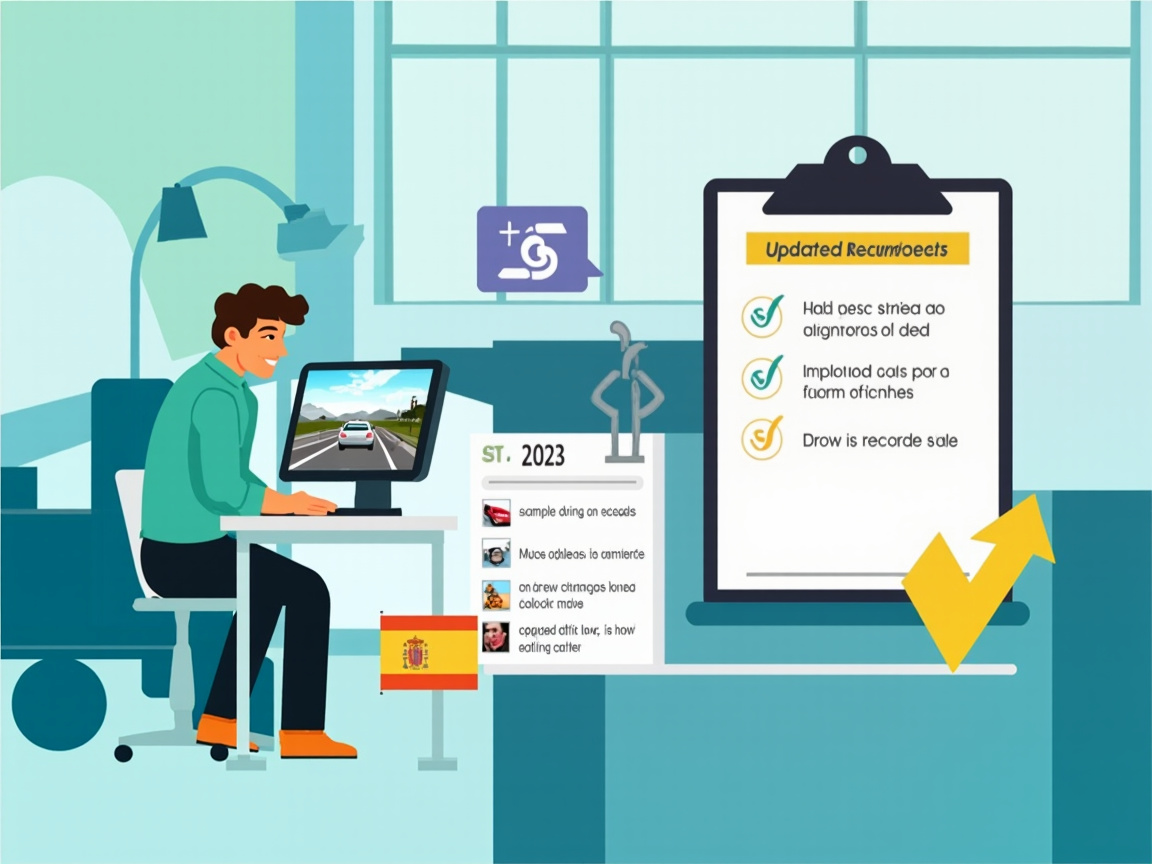
The upcoming reforms to Spain's driving test regulations encompass several critical areas:
- Digital modernization of theoretical examinations
- Extended practical driving assessment requirements
- Increased emphasis on environmental awareness
- Enhanced safety protocol training
- New mandatory hazard perception elements
- Modified scoring system with stricter pass criteria
These changes reflect Spain's commitment to improving road safety statistics, which currently show that new drivers are disproportionately involved in traffic incidents during their first two years of driving.
Timeline for Implementation
The implementation of these Spain driving test rule changes will follow a phased approach:
- Initial Announcement Phase: Already completed in late 2022
- Preparation Period: January-June 2023 (driving schools adapting curricula)
- Pilot Program: July-September 2023 (testing in select provinces)
- Full Implementation: October 2023 (nationwide rollout)
- Evaluation Period: Throughout 2024
This carefully planned timeline is designed to give driving schools and instructors adequate time to adjust their teaching methodologies while allowing prospective drivers to prepare for the new requirements.
New Theoretical Test Requirements
Digital Adaptive Testing
The theoretical component will transition to a fully digital adaptive testing system that adjusts question difficulty based on candidate performance. This represents a 30% change in the examination approach compared to the current static testing format.
Enhanced Hazard Perception
Candidates must demonstrate superior hazard perception abilities through interactive video scenarios that simulate real-world driving conditions. This section aims to reduce reaction-time related accidents among new drivers.
Environmental Knowledge Assessment
A new section focusing on eco-driving practices and environmental impact awareness will constitute 15% of the theoretical examination, reflecting Spain's commitment to sustainable transportation.
Practical Examination Updates
Extended Testing Duration
The practical driving examination will increase from the current average of 25 minutes to approximately 40 minutes, allowing for more comprehensive assessment of driving capabilities in varied conditions.
Mandatory Night Driving
Unlike the previous system, the reformed practical test will require candidates to demonstrate proficiency in night driving conditions, addressing a critical gap in driver preparation identified by safety researchers.
Highway Competency Evaluation
All practical tests will include mandatory highway driving segments, ensuring new drivers are prepared for high-speed traffic situations that were previously optional in some testing centers.
Digital Integration in Testing
The Spanish DGT driving test reforms incorporate significant technological enhancements:
- Mobile application for practice tests and tracking progress
- Virtual reality pre-assessment tools
- GPS-tracked practical examinations for consistency
- Digital scoring systems for instantaneous feedback
These technological integrations aim to standardize testing procedures across different regions of Spain while providing candidates with better preparation tools.
Environmental Considerations
In alignment with Spain's climate commitments, the new regulations place greater emphasis on environmentally conscious driving:
- Eco-driving techniques will be mandatory test elements
- Electric vehicle operation knowledge included in testing
- Reduced idling and efficient route planning as scored components
These elements reflect a 25% increase in environmental content compared to previous testing requirements.
Financial Implications for New Drivers
The comprehensive nature of these changes will impact the financial aspect of obtaining a license:
- Extended training requirements may increase instruction costs by 15-20%
- Additional practice sessions for new test elements
- Higher first-attempt success rates expected to offset some costs
The DGT estimates that despite potentially higher upfront costs, the reformed system should improve first-time pass rates, reducing the overall expense for many candidates.
Adaptation Period for Driving Schools
Driving schools across Spain are currently implementing curriculum adjustments to accommodate these changes:
- Instructor retraining programs
- New teaching materials development
- Upgraded simulation equipment installation
- Modified practice regimens for students
This adaptation represents the most significant overhaul for driving education providers in over a decade.
Benefits of the New System
The Spain driving test rule changes are projected to yield several positive outcomes:
- 20% reduction in accidents involving newly licensed drivers
- Improved driver confidence in varied conditions
- Better preparation for modern driving challenges
- Enhanced alignment with European driving standards
- Increased focus on sustainable driving practices
Transportation safety experts anticipate these reforms will significantly contribute to Spain's road safety goals for the coming decade.
Conclusion
The 2023 Spain driving test rule changes represent a comprehensive modernization of the licensing process, emphasizing safety, technological adaptation, and environmental consciousness. While these changes may initially present challenges for both driving schools and candidates, they ultimately aim to create more competent, confident, and responsible drivers on Spanish roads.
For prospective drivers planning to obtain their license in the near future, early preparation and familiarity with these new requirements will be essential. The reformed system offers not just a path to driving privileges, but a more thorough education in safe, responsible, and sustainable mobility.
Frequently Asked Questions
When exactly will the new driving test rules be implemented across Spain?
The nationwide implementation is scheduled for October 2023, following a pilot program in select provinces during the summer months.
Will current driving lessons and materials be sufficient for the new test format?
Most driving schools are updating their curricula and materials throughout 2023. Students beginning their training after June 2023 should specifically ask about updated programs.
Are there any exemptions for foreign license holders looking to exchange their license for a Spanish one?
The exchange process for EU licenses remains largely unchanged. However, non-EU license holders may face additional requirements under the new system.
How will the changes affect the cost of obtaining a driver's license in Spain?
Initial estimates suggest a potential 15-20% increase in training costs, though improved first-attempt pass rates may offset these for many candidates.
Will tests be available in languages other than Spanish?
The theoretical test will continue to be available in several languages, including English, French, German, and Arabic, with updated content reflecting the new requirements.